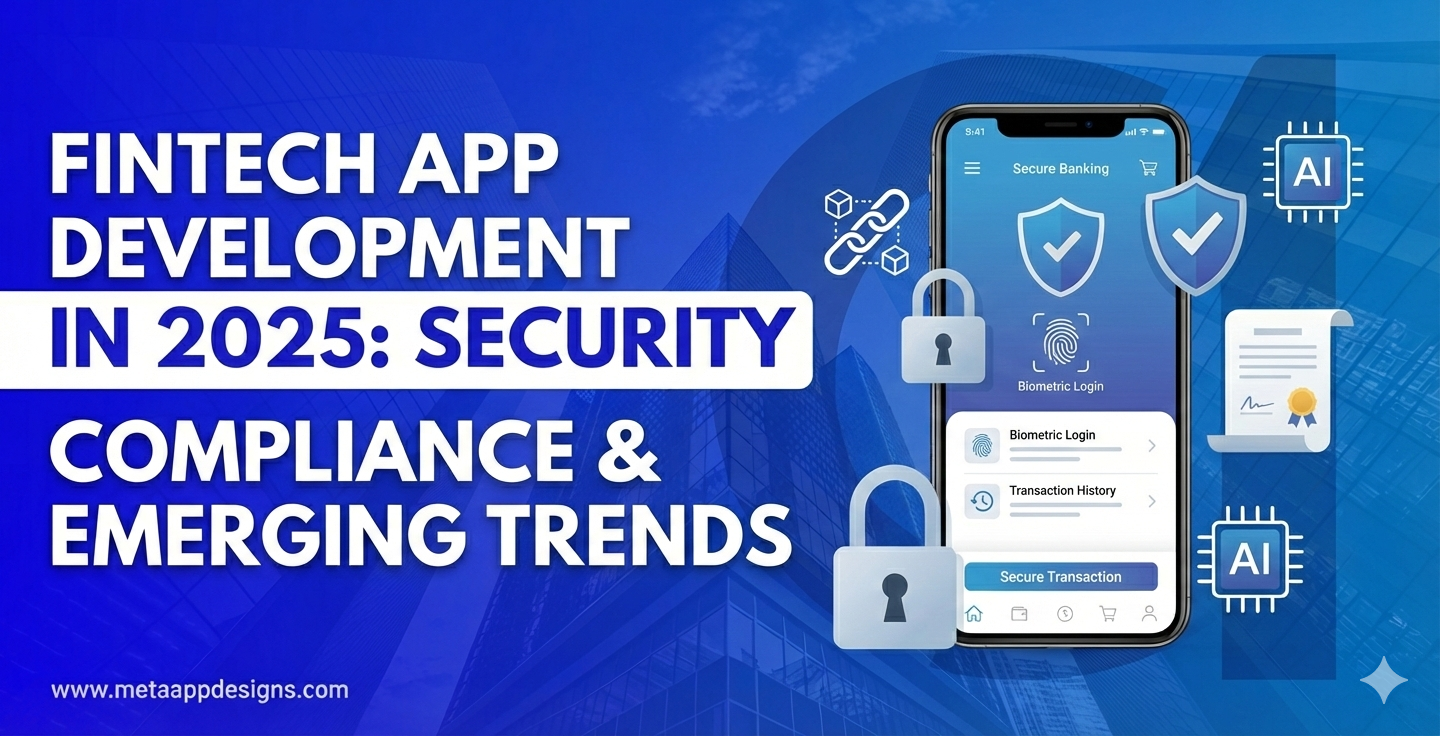
The era of convenient banking is over. In 2025, convenience is merely the baseline; the new battleground is intelligence and invisible infrastructure.
Thank you for reading this post, don't forget to subscribe!While early guides from industry players like Helpware and AVOW correctly emphasized the importance of customer support and user acquisition in the initial fintech boom, the narrative has shifted. The fintech app development landscape of 2025 is no longer just about building a sleek interface; it is about architecting a fortress that feels like a playground. It is about creating ecosystems where financial transactions happen so seamlessly they become invisible yet are guarded by security protocols so advanced they border on precognition.
As we navigate through 2025 developers and stakeholders are facing a dual mandate: innovate at the speed of AI but comply with the rigidity of global financial regulations. This guide explores the unwritten rules of building the next generation of financial platforms, focusing on the convergence of hyper security regulatory evolution and the seven trends defining the future.
The 2025 Shift: From Mobile First to AI First
Table Of Content
For the last decade, the mantra was Mobile First. Today,y a mobile banking app that doesn’t think for the user is obsolete. We have moved into an era where the app is not a passive tool for checking balances but an active financial guardian.
The market saturation is real. Users are fatigued by fragmented apps, one for stock,s one for savings, one for crypto. The winners in 2025 are the Super Apps and Embedded Finance platforms that aggregate these services. However,r this centralization creates a honeypot for cyber threats, ts making security the primary product,uct not just a feature.
1. The New Security Standard: AI Fraud Detection & Behavioral Biometrics
The old model of security relied on gates, passwords, words,s OTPs, and static questions. These are reactive. If a hacker has the key, the gate opens. The 2025 approach is predictive.
Predictive AI Fraud Detection
Modern fintech app development must integrate AI agents that do not just flag suspicious transactions but predict them before they occur. We are seeing a move tpre-crimee Crime algorithms in finance.
- Anomaly Detection at Scale: unlike traditional rule-based systems, e.g., flag if over $10000, AI models now analyze thousands of data points, location,n device, telemetry,y spending velocity,y and even the time of day to establish a pattern of life for each user.
- Self-Healing Security: Emerging systems can autonomously freeze specific API endpoints if they detect a brute force attack without shutting down the entire app.
- The Human Element: AI is now capable of distinguishing between a user making a panicked transfer under duress, social engineering,g and a genuine emergency transfer, er often by analyzing navigation speed and hesitation patterns.
Next Gen Biometric Authentication
Fingerprints and FaceID are now standard, but they are static. 2025 introduces Behavioral Biometrics.
- Keystroke Dynamics: The app learns how a user types the flight time between keys and the pressure applied to the screen.
- Gyroscopic Analysis: How does the user hold their phone? At what angle? A mobile banking app in 2025 can lock itself if the physical handling of the device does not match the owner’s profile, effectively neutralizing stolen device scenarios even if the phone is unlocked.
2. The RegulatoryTightropee: PSD2 Open Banking and Beyond
Compliance was once viewed as a hurdle; now it is a competitive moat. In 202,5 the dust has settled on PSD2 Payment Services Directive, 2, and we are looking toward global Open Finance frameworks.
The Evolution of Open Banking
Compliance is no longer just about checking boxes,xes it’s about interoperability. Digital wallet development now requires deep integration with Open Banking APIs that allow users to view and manthird-partyarty bank accounts directly within a fintech interface.
- Data Sovereignty: The trend is shifting from data sharing to data sovereignty. Apps must build granular consent dashboards where users can revoke access to specific data points, e.g, Share my transaction history but not my balance with a single tap.
- Instant Settlements: Utilizing Open Banking rails for Account to Account A2A payments is bypassing traditional card networks, ks saving merchants fees and offering users instant settlement. For developers, this means mastering RESTful APIs that can handle real-time reconciliation without latency.
3. The Tech Stack of Tomorrow: Blockchain & Decentralization
While the crypto craze has stabilized, the underlying technology has become the plumbing of modern finance.
Blockchain Integration Beyond Crypto
We are seeing a trend where fintech app development utilizes private or permissioned blockchains for the heavy lifting of backend settlements.
- Smart Contracts for Compliance: Instead of manual audit,s smart contracts can automatically enforce regulatory rules. For example, le a trade can be automatically blocked by the code itself if the user’s KYC Know Your Customer status has expired, ensuring 100% compliance without human intervention.
- Cross Border Velocity: For apps focusing on remittance,s blockchain integration provides a liquidity bridge that allows for near instant cross-border transfers at a fraction of the cost of SWIFT, a feature that is rapidly becomingnon-negotiablee for migrant demographics.
4. 7 Emerging Fintech Trends Dominating 2025
To build a mobile banking app or wallet that survives the next five years, it must align with these seven emerging vectors.
Trend 1: Embedded Finance The Invisible Bank
Banking is no longer a destination; it is a utility. Non-financial apps, ride sharing e commerce healthcare are embedding digital wallet development directly into their ecosystems. The trend is Buy Now Pay Later BNPL evolving into Save Now Buy Later SNBL and instant insurance issuance at the point of sale.
Trend 2: Hyper Personalization via Generative AI
Static dashboards are dead. The 2025 interface is generative. The app should not just show a pie chart of spending, it should generate a natural language daily briefing: You spent 15% more on dining this week than usual. If you skip one dinner next week,k you will hit your savings goal for the Iceland trip.
Trend 3: Green Fintech & ESG Tracking
A massive demographic shift requires apps to track not just financial cost but environmental cost. New APIs allow apps to estimate the carbon footprint of every transaction. A mobile banking app that offers Green Offsetting with a single tap is gaining massive traction among Gen Z and Millennial users.
Trend 4: Voice First Banking
With the maturation of NLP, Natural Language Processing, voice payments are becoming secure and viable. He,y A, pp pay the electricity bill is becoming a standard command. Authenticating these commands using Voice Biometrics voice printing is a critical development area.
Trend 5: RegTech Automation
Regulatory Technology RegTech is being integrated directly into the dev ops cycle. Automated compliance bots scan code and transaction flows in real time to ensure adherence anti-moneyney laundering AML laws, reducing the legal overhead for fintech startups.
Trend 6: The Rise of Financial Health Gamification
Financial literacy is being gamified. Users level up their avatars by improving credit scores or maintaining savings streaks. This utilizes psychological hooks similar to social media to drive positive financial behavior,r increasing user retention and lifetime value LTV.
Trend 7: DeFi Bridges for Mass Adoption
The wall between De, Fi Decentralized Finance,nce and Tr,adFi Traditional Finance is crumbling. 2025 apps are offering DeFi Mullets business in the front, clean traditional UI party in the back,k yielding farming and staking protocols running in the background. Users earn high DeFi yields without ever seeing a wallet address or private key.
Competitive Angle: Why Good Enough is Failure
Guides from firms like Helpware and AVOW have historically focused on the operational side of how to support customers and how to acquire them. While valid, they miss the engineering reality of 2025: Trust is the only metric.
In an era of deepfakesand AI-drivenn scams, a mobile banking app is only as good as its ability to prove it is secure. You are not just competing with other banks; you are competing with the sophistication of global cyber syndicates.
The Developer’s Mandate
For teams engaging in fintech app development,t the roadmap is clear but demanding. You must build modular architectures Microservices that allow you to swap in new AI models or blockchain protocols as they emerge. You must treat compliance not as a final checklist but as a foundational constraint in your code.
Conclusion
Fintech in 2025 is a paradox of complexity and simplicity. The backend has never been more complex, ee.g., utilizing AI neural networks,blockchain-ledr,,s and biometric behavioral analysis. Yet the frontend must be simpler than ever, invisible, helpful, and human.
Whether you are focusing on digital wallet development or building a comprehensive neobank, the key to unique success lies in predicting the user’s need before they feel it and securing their wealth before they fear for it. The apps that win in 2025 will be the ones that successfully merge the cold logic of code with the warm assurance of safety.