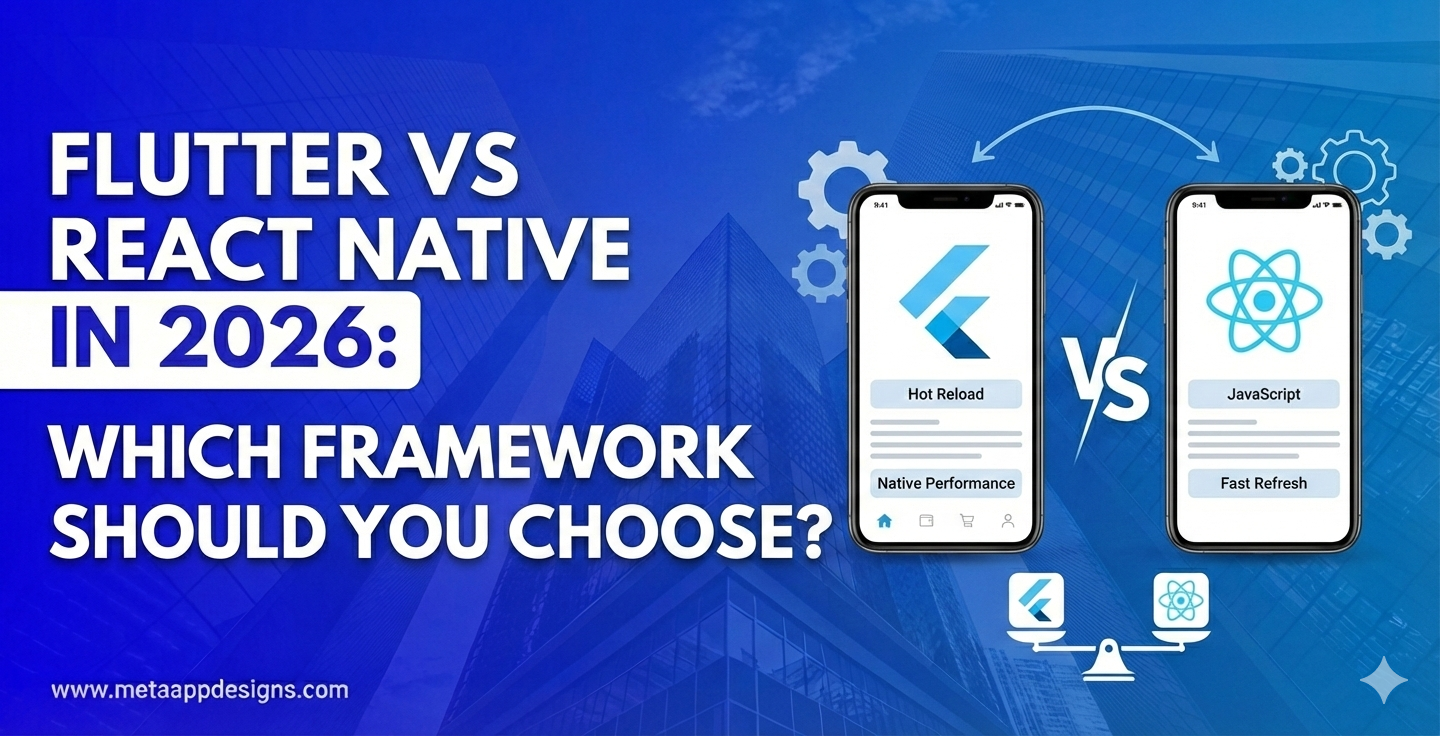
I remember the dark ages of mobile development back in 2012. We were wrestling with PhoneGap and Apache Cordova, trying to convince clients that a laggy web view was good enough for cross-platform mobile apps. It was not. Fast forward to today, standing on the threshold of 2026, and the mobile app development landscape has shifted tectonically. We are not just looking for good enough anymore; we are looking for native-beating performance from modern cross-platform frameworks.
Thank you for reading this post, don't forget to subscribe!As someone who has spent over a decade writing code, managing technical debt, and explaining mobile architecture decisions to stakeholders, I’ve watched the Flutter vs React Native 2025 and 2026 debate evolve from a fanboy war into a nuanced business decision. If you are a CTO, a startup founder, or a lead developer deciding on your mobile app framework for 2026, you do not need generic documentation rewrites. You need the ground truth.
Here is the unfiltered reality of the cross-platform framework comparison as we head into 2026.
The Philosophy: Painting Pixels vs. Orchestrating Views
Table Of Content
To understand mobile app performance metrics in 2026, you have to understand the DNA of these cross platform tools.
Flutter is a control freak—in the best possible way. It does not trust the OEM platform, iOS or Android, to render a button. Instead, Flutter asks the OS for a blank canvas and draws every single pixel itself using its rendering engine. By 2026, the transition from Skia to the Impeller engine is complete and mature on both Android and iOS. This means Flutter effectively bypasses the native UI hierarchy entirely, eliminating the dreaded jank caused by runtime shader compilation.
React Native, on the other hand, is a diplomat among cross platform app frameworks. It uses JavaScript or TypeScript to negotiate with the host OS, asking it to render native UI widgets. For years this negotiation happened over a Bridge—a slow, asynchronous message queue that caused performance bottlenecks. But in 2026, the New Architecture with the Fabric renderer and TurboModules is the default. The Bridge is dead. React Native now communicates synchronously with the native layer using JSI, the JavaScript Interface.
What This Means for You
Flutter guarantees pixel-perfect UI consistency. A pixel on a Samsung Fold looks exactly the same as on an iPhone 16 Pro.
React Native guarantees native platform behavior. If Apple changes the physics of a scroll bounce in iOS 19, your React Native app inherits it automatically. Flutter would need an SDK update to mimic it.
2026 Performance Benchmarks: The Impeller vs Fabric Showdown
For this mobile app framework comparison, let’s look at real-world scenarios rather than Hello World demo apps.
1. Cold Start Time
Flutter: With the Impeller engine pre-compiling shaders, Flutter has solved the early frame jank issue. Cold start times are averaging ~250ms on mid-range Android devices.
React Native: With Hermes as the default JavaScript engine and statically generated bytecode, React Native has closed the gap significantly. It clocks in around ~350ms.
Verdict: Flutter wins slightly on raw startup speed, but the difference is negligible for 99% of mobile users.
2. Complex Animations: 60fps vs 120fps
This is where my 10+ years of mobile development experience screams caution.
Flutter: It handles 120fps ProMotion animations with ease because it controls the entire rendering pipeline. I recently built a complex data visualization app with hundreds of animated nodes, and Flutter did not drop a single frame.
React Native: With Fabric, the UI is far more responsive, but complex layout thrashing can still drop frames on lower-end Android devices. React Native relies on the native main thread, so if that thread gets blocked, your animations stutter.
Verdict: Flutter is the clear winner for animation-heavy, graphics-intensive, or creative mobile applications.
3. Memory Footprint
Flutter: Because it ships with its own rendering engine, even a Hello World APK is heavier—approximately 5–10 MB larger than a fully native app.
React Native: Slightly lighter at the start, but the app size grows rapidly as you add native dependencies and third-party packages.
The Developer Experience (DX): Dart vs the TypeScript Ecosystem
I have hired and led teams for both frameworks. Here is the brutal truth about the developer talent pool in 2026.
The React Native Ecosystem
React Native has the unfair advantage of the web ecosystem. If you already know React, you are 80% of the way there. In 2026, the tooling has matured significantly:
Expo is no longer just for prototypes; it’s the standard for React Native app development. The “Configuration from Hell” days are mostly over.
Update Pain: Despite improvements, upgrading a major React Native version—such as moving to 0.76+—can still feel like performing open-heart surgery.
Talent: You can hire a web developer and have them contributing to your mobile app codebase in two weeks.
The Flutter Ecosystem
Dart is a beautiful programming language. It feels like the love child of Java and TypeScript—but it is still a barrier.
Tooling: Google’s Flutter tooling is superior. The debugger, widget inspector, and hot reload are more reliable than React Native’s Fast Refresh.
Stability: I have opened Flutter projects built in 2023 and run them in 2026 with minimal changes. The Flutter API surface is remarkably stable.
Talent: You cannot simply repurpose your web team. You need dedicated Flutter developers.
Cost Comparison: The Hidden Numbers
When clients ask me for a cross platform framework comparison based on cost, I show them this breakdown for a typical 6-month MVP mobile app project:
| Expense Category | React Native | Flutter | My Insight |
|---|---|---|---|
| Initial Development | $40,000 | $45,000 | React Native starts faster due to its massive ecosystem of pre-built components |
| QA & Testing | $15,000 | $10,000 | Flutter saves money here due to fewer platform-specific UI inconsistencies |
| Maintenance (Year 1) | $20,000 | $12,000 | React Native’s dependency churn is real; Flutter’s first-party packages age better |
| Total Year 1 Cost | $75,000 | $67,000 | Flutter is often cheaper long-term |
Surprise: React Native is cheaper to start, but Flutter is usually cheaper to maintain.
The Human Factor: What 10+ Years Has Taught Me
Beyond benchmarks and performance metrics, there is an emotional component to choosing a mobile tech stack.
When I lead a React Native team, the vibe is chaotic but fast. We move quickly, break things, and rely on the massive open-source community to find workarounds. It feels like a bustling startup city.
When I lead a Flutter team, the vibe is disciplined and architectural. Dart’s strict typing and the widget tree force developers to think about composition. It feels like a well-oiled factory.
In 2026, the biggest risk for Flutter is Google. Despite reassurances, Google Graveyard anxiety is a real psychological factor for enterprise clients. React Native, being community-driven despite Meta’s involvement, feels safer to some teams because it is effectively too big to fail.
Final Verdict: Which One for 2026?
The decision around Flutter vs React Native in 2025 and beyond ultimately comes down to your company’s DNA.
Choose React Native if:
-
You are Web-First: Your team lives and breathes React.
-
You Need OTA Updates: You want CodePush-style hot updates without App Store reviews—a superpower Flutter still lacks natively.
-
Your App Is Standard: You are building an e-commerce, marketplace, or news app using standard OS components.
Choose Flutter if:
-
Brand Identity Is King: You want a custom, award-winning UI that breaks OS conventions.
-
Performance Is Non-Negotiable: You are building a media editor, advanced dashboard, or graphics-heavy application.
-
You Hate “It Works on My Machine”: You want absolute consistency between simulator and real devices.
In 2026, both Flutter and React Native are incredible feats of engineering. We are light-years away from the PhoneGap era. But if you forced me to pick the framework that lets me sleep better at night, I’d choose Flutter for its stability. If you forced me to ship an app next week, I’d choose React Native.
Choose your weapon wisely.