Financial product startups no longer have to build their banking systems from the ground up. Open banking APIs enable apps to integrate directly with trusted account information, payment capabilities, and identity authentication systems in as little as weeks, rather than months.
Thank you for reading this post, don't forget to subscribe!For founders looking to venture into fintech mobile app development services, understanding how these APIs work is the first genuine step towards creating a secure, compliant, and scalable mobile app from the ground up.
What Open Banking APIs Actually Do
Table Of Content
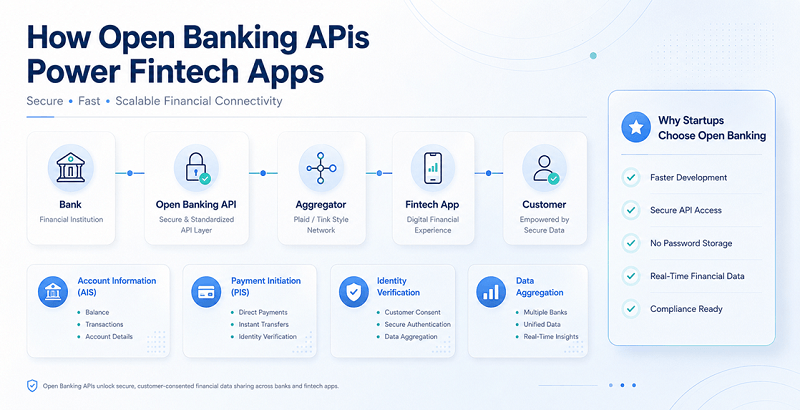
Open banking APIs enable third parties to securely access financial data with the customer’s permission. Rather than scraping logins from a web page, apps interface with banks via standard, secure endpoints that banks provide for just this purpose.
This change has enabled real-time balance checks, transaction categorization, and immediate payment initiation without storing the user’s password.
It’s important to early-stage teams because it takes years of infrastructure work off their shoulders. A clever fintech mobile app development company can integrate these APIs to do this knee-buckling onboarding, KYC, and account verification, so that the founders can concentrate on the actual experience of their product rather than its banking plumbing.
Core Building Blocks Startups Rely On
It’s good to be aware of what is actually being developed under the interface before selecting a development partner.
- Account Information Services (AIS) – provides balance information, transaction history, and account information
- Payment Initiation Services (PIS) – initiates direct transfer from one bank account to another
- Identity verification layers – ensure someone is the owner before allowing them access to data
- Data aggregation middleware – ensures data is normalized from multiple banks.
The majority of fintech app design and development teams do not build direct bank integrations but instead use existing aggregators such as Plaid or Tink, which already have relationships with thousands of financial institutions.
Why Startups Are Moving Fast on This
Going open banking is not simply a competitive game; it’s where money is already flowing.
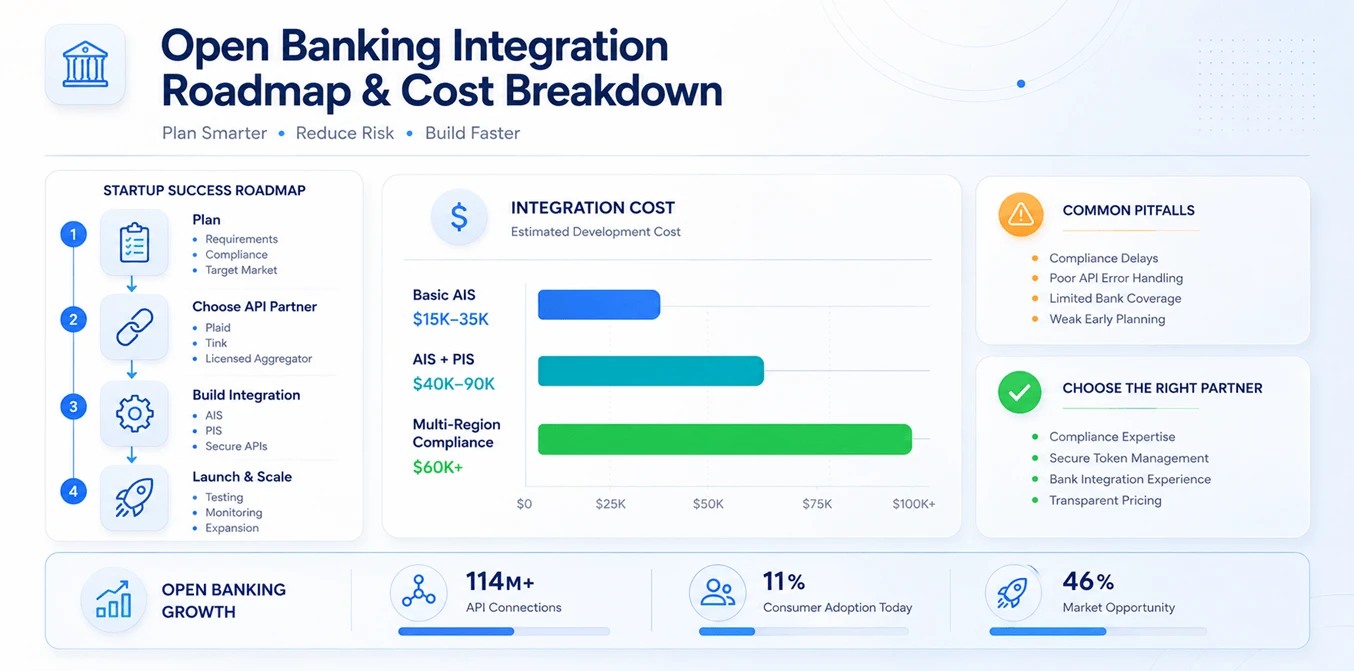
While only about 11% of U.S. consumers have adopted open banking payments for at least one purchase, the PYMNTS research indicates the opportunity exists for startups to make up the gap, as the proportion is around 46%.
The full breakdown is available in PYMNTS’ coverage open banking.
It’s in that space that new fintech products take root. Infrastructure adoption will continue regardless of how quickly consumer habits catch up, yet custom fintech application development solutions that accommodate this shift can reach early adopters before larger financial institutions modernize their own applications.
The Infrastructure Growth Behind the Trend
From the outside, one can easily underestimate the magnitude of this change. API connections between financial companies have more than doubled in just one year, reaching approximately 114 million, according to a report from Payments Dive, and are mostly replacing screen scraping to send cleaner data.
It is the same rate of growth that has made mobile application development for fintech a must-have rather than a nice-to-have.
Choosing the Right Development Partner
Not all agencies with fintech experience have experience with compliance-driven banking integrations. A competent fintech app development agency will have a lot of knowledge about the prior API integrations it has done, how it secures tokens, and its understanding and awareness of regulatory requirements in the domain you plan to go for before finalizing any contract.
Knowing something about their region is also important. While hourly rates are important to consider, startups seeking Fintech App Development Cost In Los Angeles: Detailed Breakdown or hire freelance fintech app developer should look for a better indicator: the time required to deliver a similar-sized project.
Common Pitfalls Worth Avoiding
Regardless of the team’s budget, they keep running into the same problems.
- Underestimating compliance review timelines
- Skipping proper error-handling for failed API calls
- Choosing aggregators without checking bank coverage in target regions
- Ignoring Common Fintech App Development Mistakes That Cost Startups Millions during early planning
Teams following a structured How To Build A Fintech App In Los Angeles (Startup Guide) avoid having to rebuild their core integrations later, which can save budget and momentum.
Budgeting for an Open Banking Integration
The costs are quite variable and depend on the scope, geography and the number of banking partners participating. For those asking, “How Much Does Fintech App Development Cost in 2026?” The numbers below are the initial estimates and will vary significantly depending on the regulations that must be met in different fintech hubs.
| Development Scope | Estimated Range |
| Basic AIS integration | $15,000 – $35,000 |
| Full AIS + PIS build | $40,000 – $90,000 |
| Multi-region compliance layer | $60,000+ |
The fintech app developing company in Chicago might have a different price tag compared to the team supplying fintech mobile app design services Miami, in part because of its familiarity with neighborhood laws and its own existing partnerships with banks.
FAQs
Conclusion
The transformative power of open banking APIs is already towing the wagons in today’s financial landscape, and they are well ahead of the game compared to startups that are still treating banking integration as an afterthought.
Irrespective of whether you are partnering with a specialized fintech mobile app development services provider or building your mobile app in-house, some things need to be established in advance.
You have to ensure that your development partner has a proven track record of shipping compliant fintech products, understands the app’s needs to securely handle sensitive customer data, and maintains transparent costs.