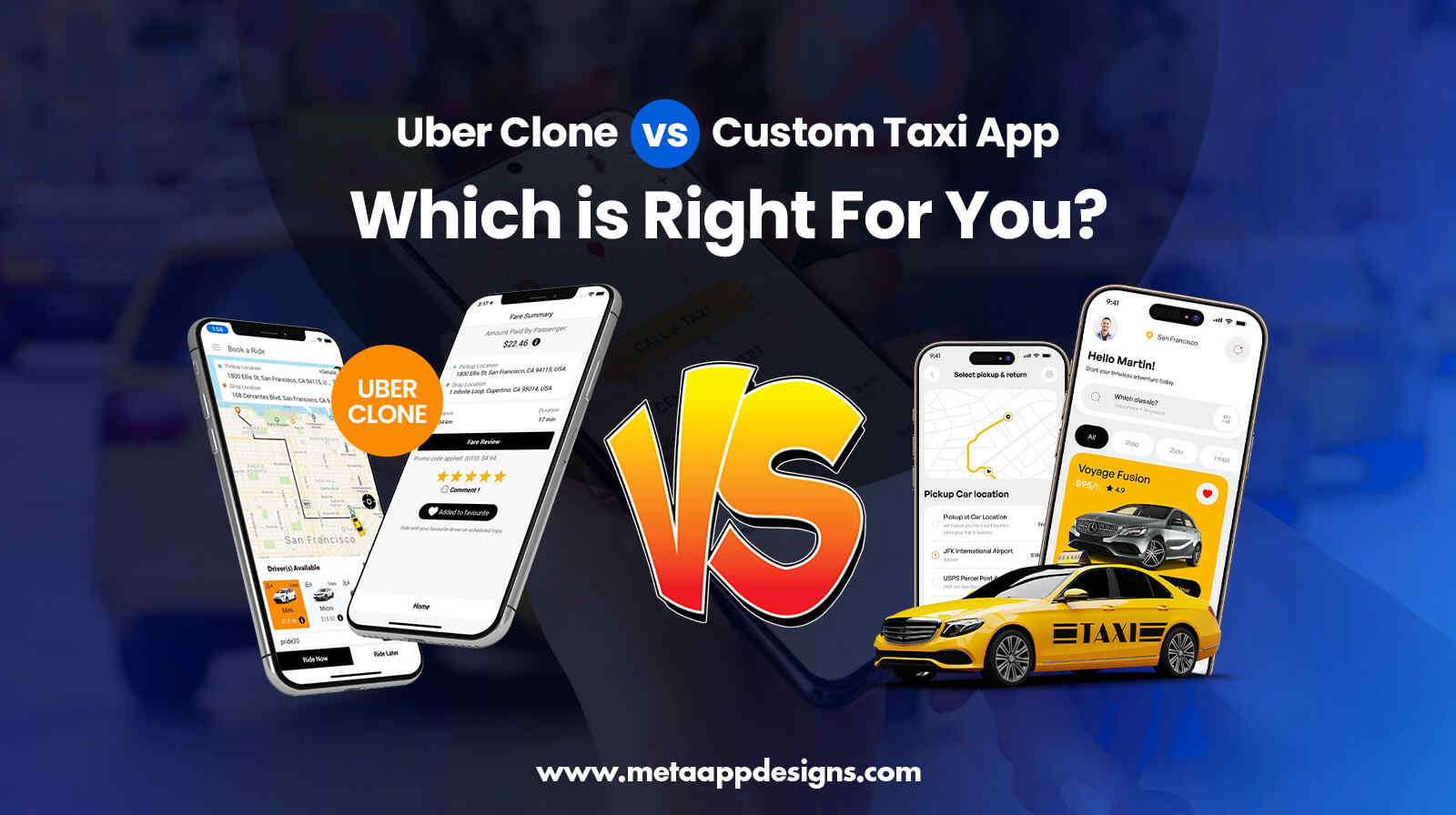
For any ride-hailing startup, one of the first and most crucial decisions is whether to go with an Uber clone or a fully custom taxi app. Of course, there are good points to both choices, but they’re oriented toward different business objectives.
Thank you for reading this post, don't forget to subscribe!When you’re considering online taxi booking app development services, it is crucial to grasp this distinction right away to avoid a lot of time, money, and frustration down the road. This will largely depend on your budget, timeframe, target market, and long-term aspirations.
Uber Clone Apps: Quick, cheap, but constrained
Table Of Content
Uber clones are templates that already exist and are based on the Uber application. The developers make changes to the brand, colors, and essential features, then pass them off for launch. It’s an enticing strategy for startups with limited budgets and tight deadlines.
The appeal is the speed. Many early-stage businesses are attracted to a clone app because it can be live in a few weeks. But these restrictions are soon revealed. Clone apps are created with common code bases, and your competitors might be operating the very same product.
It has a limited scale, almost impossible differentiation, and you have little control over the roadmap because you have to follow the vendor’s updates.
It’s important to know what the investment in developing a custom route is before getting too deep into it.
How Much Does It Cost to Build a Taxi Booking App?
What is the taxi app development cost? It is the question that all founders ask early on, and the truth is, there’s a lot of variation. A basic clone can cost anywhere from $5,000 to $20,000.
Whereas a fully customized mobile application design and development project can cost anywhere from $40,000 to $200,000+, depending on features, platforms, and the development team’s location.
Let’s take a look at the guesstimate of the cost of a custom taxi app:
| Feature/Component | Estimated Cost |
| UI/UX Design | $5,000 – $15,000 |
| Passenger App (iOS + Android) | $15,000 – $40,000 |
| Driver App | $10,000 – $25,000 |
| Admin Dashboard | $8,000 – $20,000 |
| Backend & API Integration | $10,000 – $30,000 |
| Testing & QA | $5,000 – $10,000 |
They are based on the work of experienced teams. Mobile App Developers in California, for instance, are more likely to impose high prices but offer enterprise-level quality. Sometimes the cost of this comes down to lower maintenance fees after launch.
How to create a taxi application similar to Uber, Lyft, and Curb in the USA?
Understanding how to build a taxi app like Uber, Lyft, and Curb in the USA goes beyond just writing code. This includes strategic planning, compliance with local transportation laws, GPS integration for real-time tracking, secure payment systems, and user-friendly driver registration processes.
Here are some of the essential features that every competitive taxi application should have:
- Live update of the actual ride and a real-time map display.
- Inter-communication between driver and rider using in-app communication.
- Implementing dynamic pricing and surge fare management.Use of dynamic pricing and surge fare management.
- Several payment methods, such as digital wallets
- A system will be used to rate and review both drivers and riders.
- Remind users to schedule an appointment and to be ready when the driver arrives.
To get these right from the start, you need a team that understands both the technology and the product’s user experience. This is where hiring online taxi booking app development services from an experienced studio can make the difference between one-time users and returning customers every day.
Custom Apps and the Technology Edge in 2026
This year, the difference between clone apps and custom builds is increasing. With AI-powered dispatch, predictive ETAs, and personalized rider experiences becoming expected and non-negotiable, Forbes reports that the on-demand mobility sector is quickly changing.
Emerging Mobile app trends 2026 AI capabilities are now becoming integral to ride-hailing platforms. Consider the possibilities for route optimization using artificial intelligence, fraud detection, demand forecasting, and even chatbots for bookings.
This innovation is not possible with clone apps. However, a custom build is where blockchain app development services can be integrated to provide a transparent record of transactions, and ecommerce mobile app development services can be introduced to tie in retail outlets, such as food pickups or courier add-ons in the same app.
The studios at the intersection of these three elements are already at work. They are building studios that integrate mobility, commerce, and AI into a single ecosystem, generating multiple revenue streams simultaneously.
Android Development and Cross-Platform Considerations
Android is no longer an option when building for the US market in particular. Optimizing for a variety of devices, screen sizes, and OS versions is a critical aspect of cracking the code and is a challenge that clone apps often fail to meet.
The use of on-demand apps continues to grow at an impressive rate, with Android the preferred platform for most ride-hailing sessions worldwide, as reported by TechCrunch. If your team includes custom delivery app developers, you’ll have access to cross-platform skills, which means your application will look and function the same way on iOS and Android, without having to write a lot of code.
Conclusion
What is the right solution for you for the Uber clone vs custom taxi app debate is not a universal answer, but the right answer. A clone could be a temporary experiment if speed and budget are the foremost considerations and you’re testing a market.
However, if the aim is to create a brand, grow a business, and maintain a competitive edge in 2025 and beyond, the long-term investment strategy is not only to hire an online taxi booking app development partner. Whatever you build, it will always be better than a template when it’s based on your users, your market, and your vision.