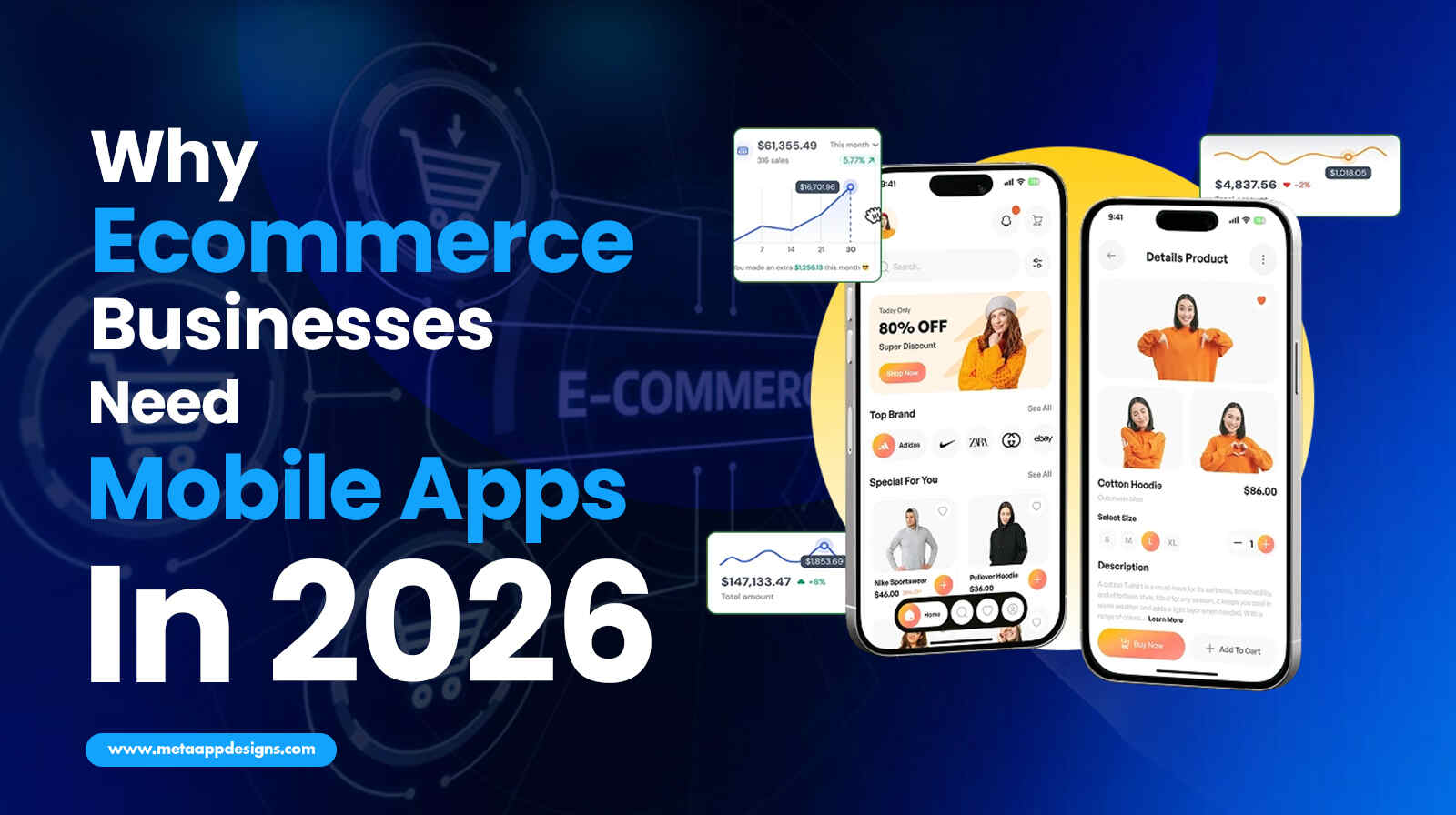
The way we shop online is forever altered. Today’s consumers are looking for quick, smooth, and personalized buying experiences, and a website isn’t enough.
Thank you for reading this post, don't forget to subscribe!In 2026, ecommerce app development services are crucial for companies aiming to compete, engage customers, and sustain their bottom line. This article explains why ecommerce brands simply can’t afford to have a mobile app.
Mobile Apps Are Reshaping eCommerce in 2026
Table Of Content
Mobile commerce is moving swiftly, before most businesses have even followed suit. Users spend much more time in apps than in mobile browsers, and conversion rates in apps are consistently much higher than on mobile websites.
Brands that delay in moving to mobile are giving their customers to a competitor that has already invested.
Creating a strong ecommerce app provides a direct link between a brand and its customers. Repeat Purchase is generated by Push notifications, personalized recommendations, and one-tap checkout.
When you work with a trusted Android app development company or a full-service agency, you can be guaranteed that the app will be designed to support active user traffic from the time it goes live.
Key Features That Make an eCommerce App Successful
The features are what keep users or cause them to lose interest in the first session. Understanding ecommerce app features before their development helps to save time and money. The user experience, from discovery to checkout to after-sales, should be the foundation of every ecommerce app.
The right set of features also impacts app store rankings, ratings, and revenue. When considering mobile app functionality to minimize friction throughout the buying journey, businesses should keep the following in mind.
Essential Must-have Features for All eCommerce Apps
These are the essentials that no ecommerce app would be without:
- Smart search with filter and voice input.
- AI-driven personalized product recommendations. AI-powered personalised product suggestions.
- Quickly check out using saved payment methods.
- Order tracking & delivery updates in real-time.
- Loyalty rewards and integration with referral programs.
- Users can add items to their wishlist, leave a review, and share their product on social media.
Forbes reports that apps with personalized shopping experiences record much higher average order values than generic browsing experiences. This makes mobile app development services among the most ROI-driven options for ecommerce businesses in 2026.
Web vs Mobile App: What Works Better for Ecommerce
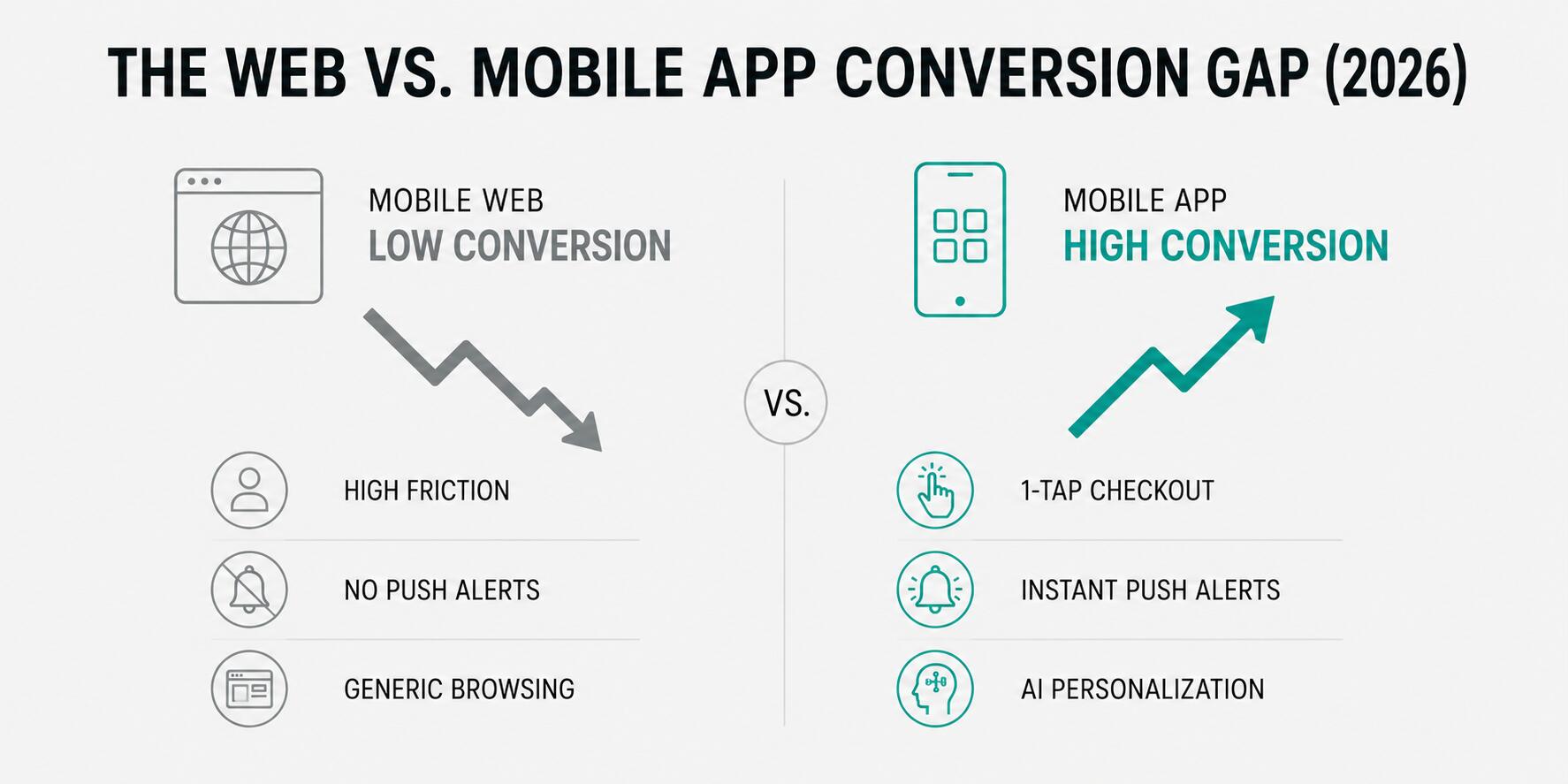
The argument between web vs mobile app for ecommerce has been a longstanding one, but the data in 2026 is pretty conclusive: Apps are the clear winner. Mobile websites are available, but not much more. They are not able to send push notifications, function when the device is not connected to the internet, or integrate with the device’s functions, such as the camera or biometrics.
Where a browser tab can’t go, a dedicated app can. App users are many times more likely to come back and make a purchase. With cross-platform app development services, enterprises can deploy a single business application to both Android and iOS while ensuring seamless performance.
Ecommerce App Development Cost and Hiring the Right Team
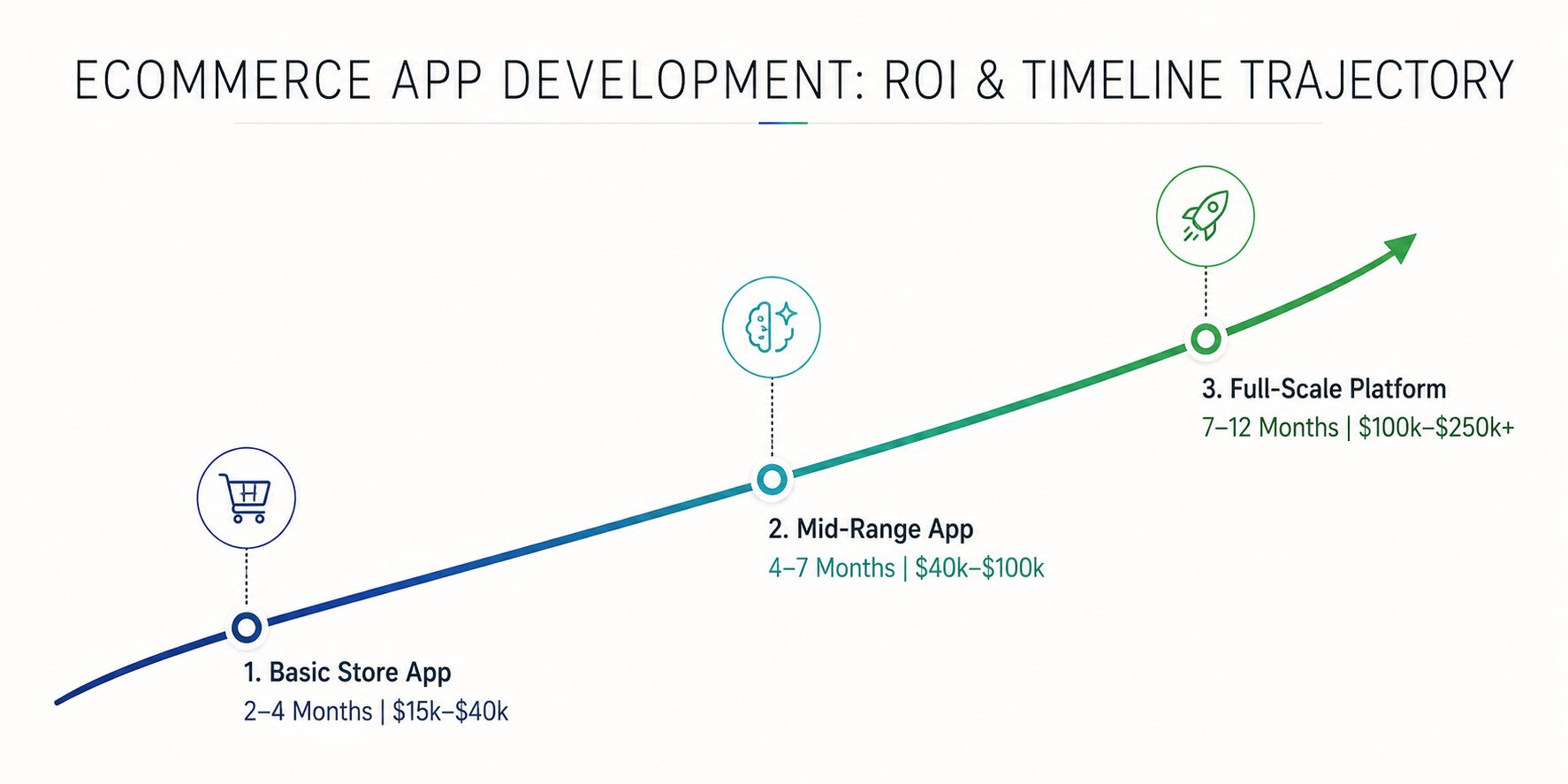
It is a common question every business asks: What will the cost of ecommerce app development be in 2026? This will vary according to the app’s complexity, its platform, and the developers’ location. The following is a realistic cost breakdown:
| App Type | Features Included | Estimated Cost | Timeline |
| Basic Store App | Catalog, cart, checkout
$15,000 – $40,000 2–4 months |
$15,000 – $40,000 | 2–4 months |
| Mid-Range App | AI recommendations, loyalty | $40,000 – $100,000 | 4–7 months |
| Full-Scale Platform | Custom integrations, analytics | $100,000 – $250,000+ | 7–12 months |
Knowing how to hire ecommerce app development company is also essential. Meta App Designs provides complete solutions, from UI/UX design to post-launch assistance. Before signing a contract, always check portfolios, ask for case studies, and verify experience with payment gateway integration.
Top cities for ecommerce app development expertise
Location and specialization are key factors when finding the right development team. App Developers in Los Angeles have extensive expertise in UI/UX due to their backgrounds in the entertainment and media industry.
New York City App Developers are highly skilled in enterprise ecommerce projects with intricate backend requirements.
The shoppers in San Francisco are experts in AI-powered shopping capabilities, and the shoppers in Austin and the App Developers in Chicago generate solid technical output and are available at competitive pricing.
Ecommerce brands are leveraging the popularity of App Developers in Miami among their Latin audiences. In the ever-evolving landscape of app development, TechCrunch regional expertise is emerging as a critical consideration when selecting an ecommerce app development services partner for a successful, long-term product.
In this constantly evolving app development landscape, regional expertise has become a major factor in choosing the right ecommerce app development services partner for a successful, long-term product.
Conclusion
Going from desktop to mobile is no longer the trend; it’s the norm. Investing in a dedicated app can lead to improved retention rates, higher conversion rates, and enhanced branding for ecommerce businesses.
Regardless of whether you’re reaching out to the App Developers in Miami, looking into cross-platform app development services, or opting for a full-service agency, the ideal app can revolutionize an ecommerce business in 2026.
Ecommerce app development services are not something that can be reserved for the elite; they are what’s necessary for sustainable digital growth.
FAQs