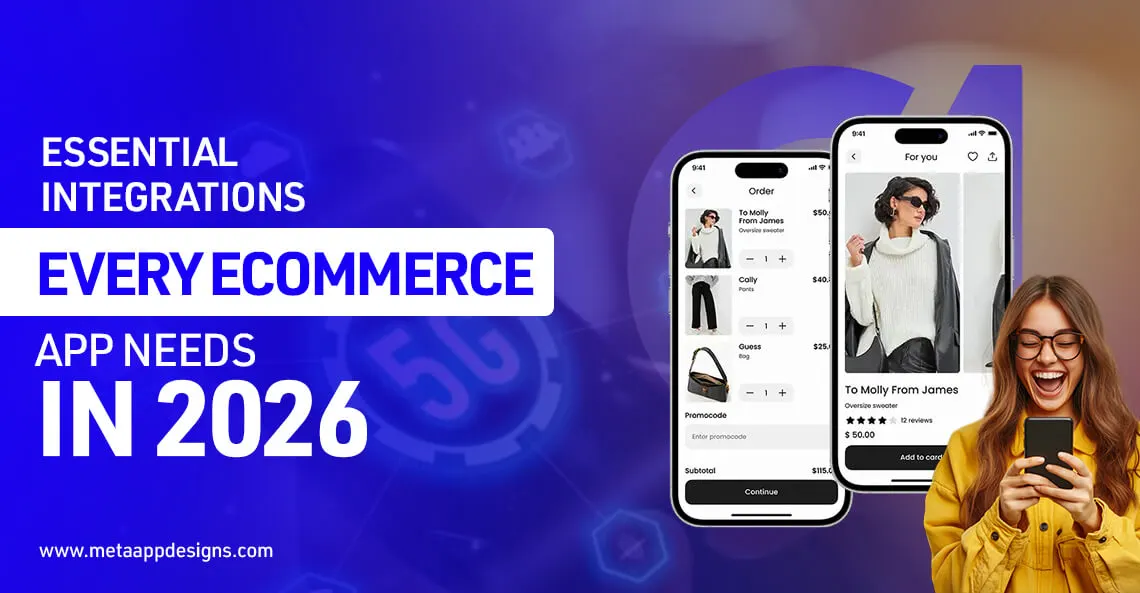
Today the checkout page is not the only part of a successful online store. As companies begin to invest in custom ecommerce app development services, they will quickly find out that the key to a successful app one that will bring in the money lies in the integration. Be it payments, marketing automation, or connecting to the right tools, the right connections can make an ordinary eCommerce storefront a place that customers will be coming back for again.
Thank you for reading this post, don't forget to subscribe!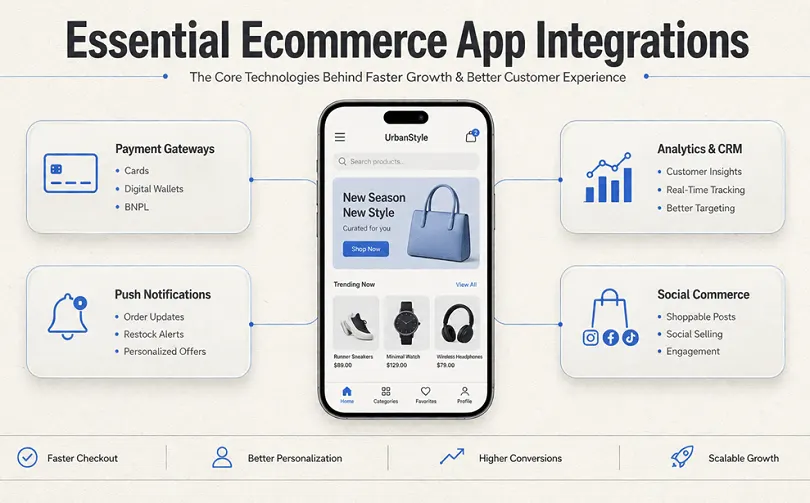
Why Integrations Make or Break Your Ecommerce App
Table Of Content
A shopper doesn’t expect the process to be slow, to be customized to them and has no reason for “friction”. When apps don’t get their connections right, they add up to inaccurate back-end connections, checkout problems, slow shipping updates and ratty support. Brands can save a lot of time and effort by working with an ecommerce app development services because if the user experience is lacking, it will become clear in the first few months with fewer conversions and negative reviews.
Reliable integrations also have an impact on the performance of apps when under strain. As the orders continue to surge, Business of Apps claims ecommerce app revenue is projected to reach $3.88 trillion in 2023, an 8.1% increase from the previous year, as long as the backend systems are able to withstand the rising order volume without crashing.
Must-Have Integrations for Modern Ecommerce Apps
All integrations are not created equal. You can bet that there are certain categories that always separate the good from the great, and if you know what they are, you can put your development dollar into something that makes a difference for your visitors, not something they wouldn’t pay attention to.
- Payment gateways: multiple options like cards, wallets, and BNPL to cut cart abandonment
- Push notifications: order updates, restock alerts, and personalized offers
- Analytics and CRM tools: real-time behavior tracking for better targeting
- Social commerce: shoppable posts powered by tools like Meta App Designs
Choosing the Right Ecommerce App Development Company
Not all ecommerce app development companies can create integrations to the same extent. Some teams offer “one size fits all” solutions, a true ecommerce application development company can work with your order volume, your customer base, and your catalog size to develop custom APIs that fit your needs and requirements.
Do some research to identify an ecommerce mobile app development company that has an experience of providing mobile apps for similar domains. If you ask them what they do in case their third party API fails, you can find out about data synchronisation delays, security audit information – it is a wonderful way to distinguish between the more experienced team and the less experienced one that only cares about having a flawless UI.
Ecommerce Website vs Mobile App: Which Needs More Integrations
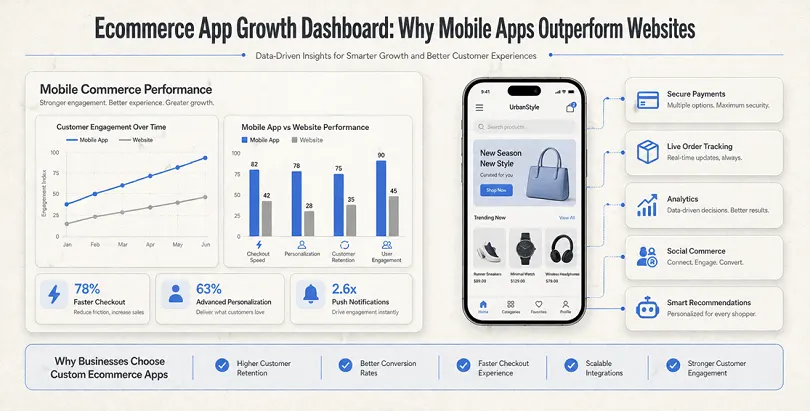
The integration needs for ecommerce website integration vs mobile app integration help companies plan their budgets better, as they treat user behaviour, notifications and checkout in vastly different ways when it comes to implementation.
| Feature | Website | Mobile App |
| Push notifications | Not supported | Fully support |
| Offline browsing | Limited | Possible |
| Checkout speed | Moderate | Faster (saved data) |
| Personalization | Basic | Advanced |
Regional Trends and Platform Choices
Development costs and vendor expertise vary by region, which is why founders researching e-commerce app development in Los Angeles: a comprehensive guide often compares local agencies against outsourced teams before committing budget to any single vendor.
Often, early-stage entrepreneurs start their business from Shopify and then come to a point where they need to add customizations, but have hit their learning curve. A shopify vs custom ecommerce app development scaling guide will typically depict that there is more customisation control when it comes to integration. Relevancy in your own app’s messaging is a competitive advantage as the average user of a mobile app receives 46 of them daily in the United States, as mentioned in Business of Apps.
Conclusion
Selecting the right mix of integrations can greatly influence your customers’ day-to-day interactions with your brand. These payment security, engagement, and scalable features are advantageous in the long run when evaluating custom ecommerce app development services or evaluating an existing platform. Early investment in the right technical foundation prevents costly rebuilds, and helps to create apps customers can trust.