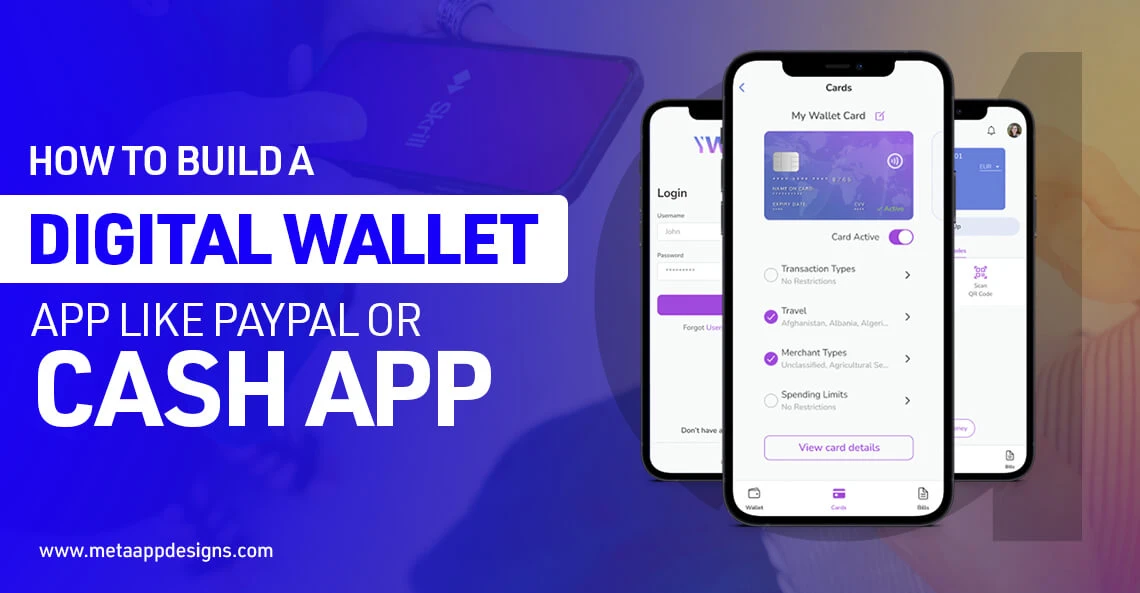
For millions of consumers, digital payments are second nature, as are the efforts businesses are making to catch up. By leveraging a fintech mobile app development company, the process of building a secure and scalable wallet service is much quicker without having to “reinvent the wheel. This guide explains in depth how to do build a digital wallet. Whether it’s peer-to-peer transfers, bill splitting or payments to the merchant, a good wallet app can make it a habit for users to use it.
Thank you for reading this post, don't forget to subscribe!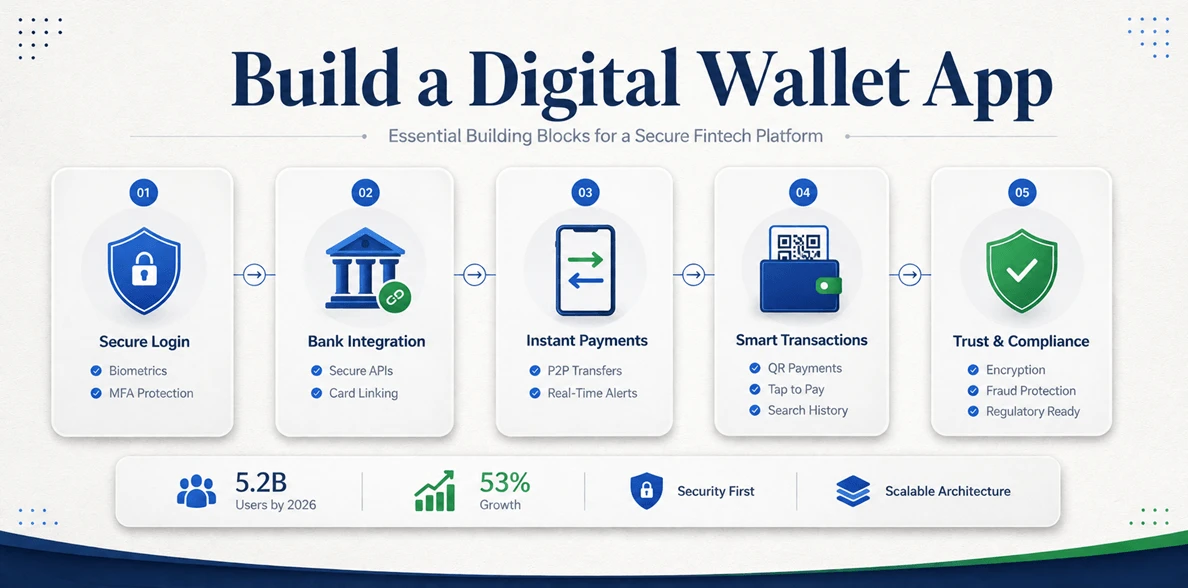
Why Digital Wallets Are Reshaping Payments Today
Table Of Content
Wallet applications are no longer niche products, but are now part of the mainstream banking infrastructure. Juniper Research estimates that there will be more than 5.2 billion digital wallet users globally in 2026, an increase from the current 3.4 billion, representing a more than 53% increase. It’s that adoption curve that’s why the founders keep asking about fintech mobile app development services; The market window is wide open, but it’s not going to last long.
Wallets are moving beyond their initial function of “store a card” as they become increasingly equipped with features like QR-based payments, tap-to-pay and embedded lending. A payment pass-through app won’t win users over against more budget-friendly options that include budget tools or bonuses or crypto support. The opportunity exists, but so does the pressure to make something truly useful that’s actually valuable from the get-go.
Core Features Every Wallet App Needs
Even an MVI wallet should have all the essential elements that make a wallet complete to users. The essentials to build a digital wallet include:
- Instant peer-to-peer transfers with real-time notifications
- Bank and card linking via secure APIs
- Biometric login and multi-factor authentication
- Transaction history with searchable filters
- QR code and tap-to-pay support
Choosing the Right Fintech App Development Partner
A wallet app’s compliance, security and the complexity of the banking-API is too much for not every development shop. The first step in how to hire a fintech app development company is to find out if they have a proven track record in building payment apps, rather than any generic mobile application. Request any case studies of KYC flows, card tokenization or bank aggregator integrations before committing to any contract.
Location matters too. A fintech app development company in USA is likely to know a lot more about the banking infrastructure within the country, ACH transfers, and the licensing requirements for money transmitters at the state level information that’s not necessarily at the fingertips of teams that aren’t used to dealing in the U.S. regulatory environment. That local information saves months of rework later.
Cost and Timeline Considerations
This breakdown will give you a good idea of the costs involved in a budget in advance:
| App Complexity | Estimated Timeline
| Estimated Cost Range |
| Basic P2P wallet
| 3–4 months | $40,000 – $80,000
|
| Wallet + card issuing
| 5–7 months
| $80,000 – $150,000
|
| Full banking-grade app
| 8–12 months
| $150,000+
|
Compliance and security essentials
Security is part of the product in this category; it is not an add-on. All custom fintech application development solutions should integrate encryption, fraud prevention and auditing capabilities from the very first sprint and not add them on later. It is almost always expensive to have to do a rebuild because of cutting corners here.
The attention of regulators on wallet apps has also increased significantly. The Consumer Financial Protection Bureau issued a rule to oversee large nonbank companies that provide digital wallet apps, to give them bank-like oversight on companies with more than 50 million transactions annually. That bar should be designed with it from the get-go, no matter how simple the app.
Design that Builds User Trust
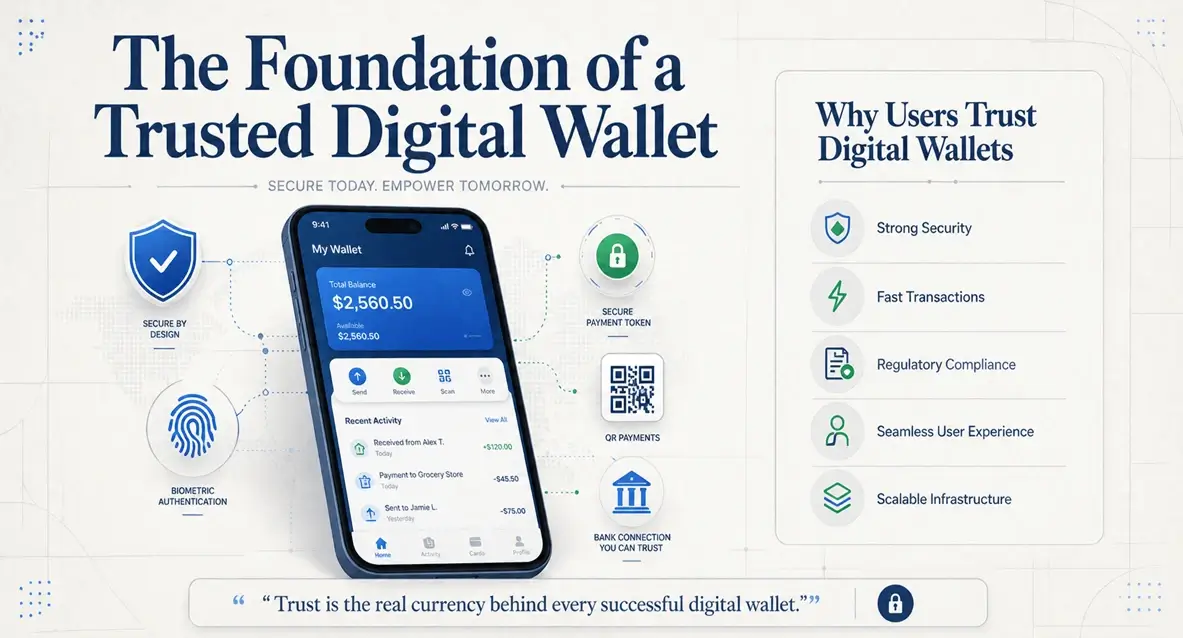
Good fintech app design and development balances simplicity with reassurance. Users must be sure that they can transfer funds with no hidden, unreadable button labels, no confusing confirmation screens. There are agencies like Meta App Designs which have proven that the interface’s design and trustworthiness are sometimes as powerful as the performance of the back end in attracting initial users.
Local flavor should also be taken into account when scaling. These are key factors to consider when thinking about how to build fintech app in New York:
- Account for New York’s BitLicense rules if crypto or stored-value features are involved
- Design for fast onboarding, since users compare against dense local competition
- Localize compliance disclosures per state-level money transmitter requirements
Conclusion
Building a wallet app like PayPal or Cash App is less about copying a feature list and more about earning user trust one transaction at a time. Choosing an experienced fintech mobile app development company, prioritizing compliance early, and investing in clean design gives a product real staying power. With adoption still climbing worldwide, businesses that move now stand to capture users before the space gets even more competitive.