The fintech revolution has been quick, and startups are trying to get digital financial products to market before it’s too late. However, going fast without a plan is costly.
Thank you for reading this post, don't forget to subscribe!Many startups spend a lot of money on fintech mobile app development services only to realize, too late, that they’ve been quietly eating away at their budgets, delaying their apps, or opening themselves up to regulatory fines.
One of the best things a founder can do before they write a single line of code is to learn from others’ mistakes.
The Hidden Costs Behind Poor Planning
Table Of Content
Building a compliant and scalable fintech product is not something that startups realize is that easy. If not planned properly at the discovery phase, then scope creep, redundant development cycles, and inflated fintech app development cost 2026 projections can be avoided.
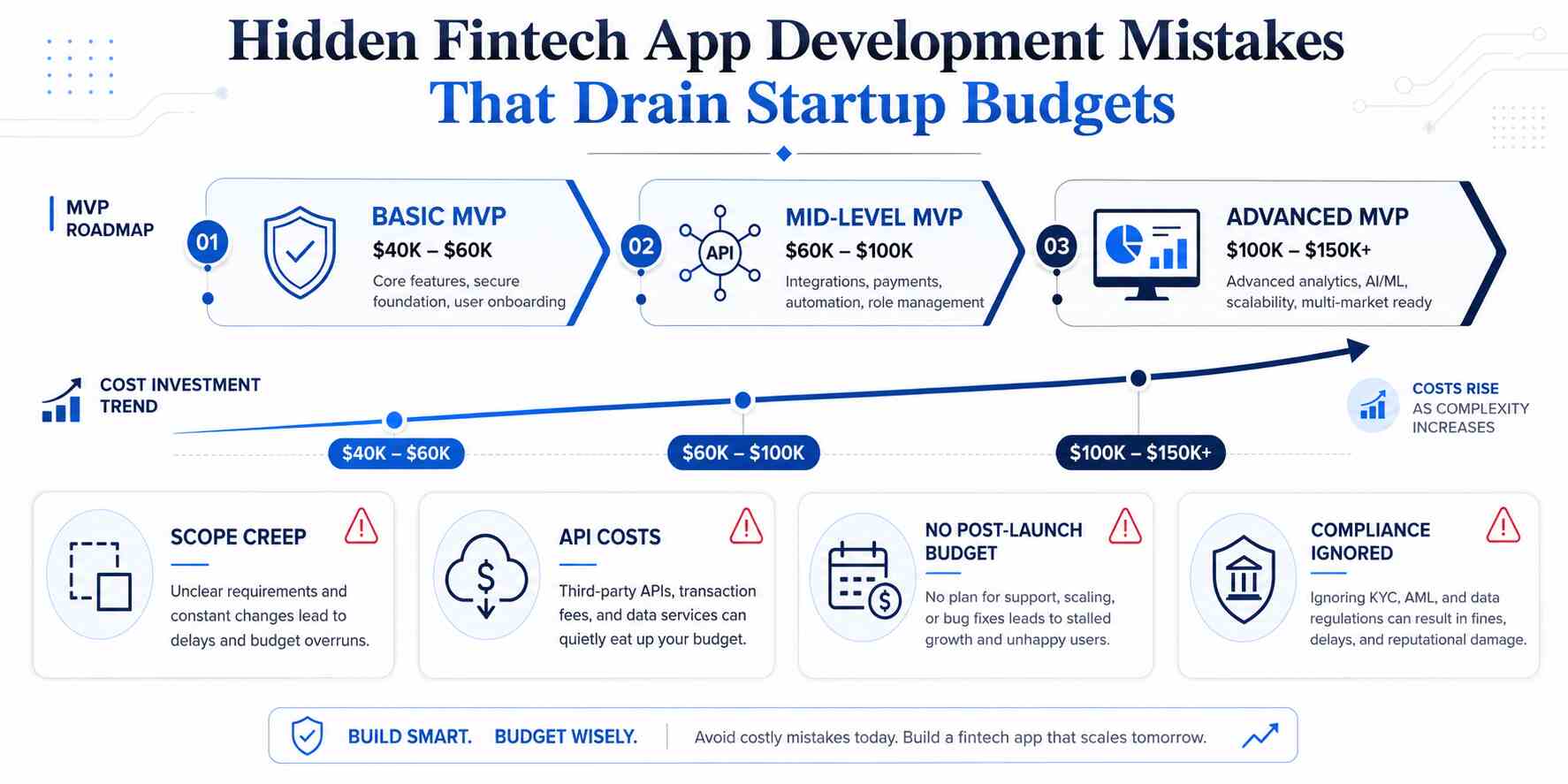
Research indicates that the average cost to build a fintech MVP in 2026 is anywhere from $40,000 to $150,000, contingent upon the features and platform. The table below shows the average price ranges of the various tiers of features for an MVP:
| MVP Tier | Core Features Included | Estimated Cost (2026) |
| Basic MVP | Auth, dashboard, basic payments | $40,000 – $60,000 |
| Mid-Level MVP | API integrations, KYC, notifications | $60,000 – $100,000 |
| Advanced MVP | Multi-currency, compliance layer, analytics | $100,000 – $150,000+ |
The following are common pitfalls of startups that do not do the proper scoping of their MVP:
- Attempting to create a product with all features rather than a lean product and going to market first.
- Not having funds for post-launch fixes and iterations.
- Underestimating the third-party API costs
- Failure to include fintech app development security compliance requirements in cost planning.
A McKinsey report on fintech growth shows that startups that rush to product development without a structured cost plan are much more likely to burn out before they find product-market fit.
Security and Compliance Are the First Priority
There’s a critical decision between planning and building that’s often an afterthought for many startups: compliance architecture. Fintech app development security compliance should be a part of the product from the first sprint, not added on after it’s released.
Once you have launched your website, it will cost you 5 to 10 times as much to fix security holes as it did to get it right in the first place.
It is not an option to follow a proper fintech app security PCI DSS compliance guide; it’s a legal requirement. A good fintech app development company will not increase compliance requirements after the product is launched. Without this, startups may face failed audits, massive fines, and, in the worst-case scenario, forced shutdowns.
Choosing the Wrong Development Partner
Not every app development studio has the capacity to deal with the intricacies of financial technology. Many startups, particularly in competitive markets such as Los Angeles fintech mobile app development, New York fintech mobile app development, or Miami fintech mobile app development, opt to hire vendors solely for their pricing.
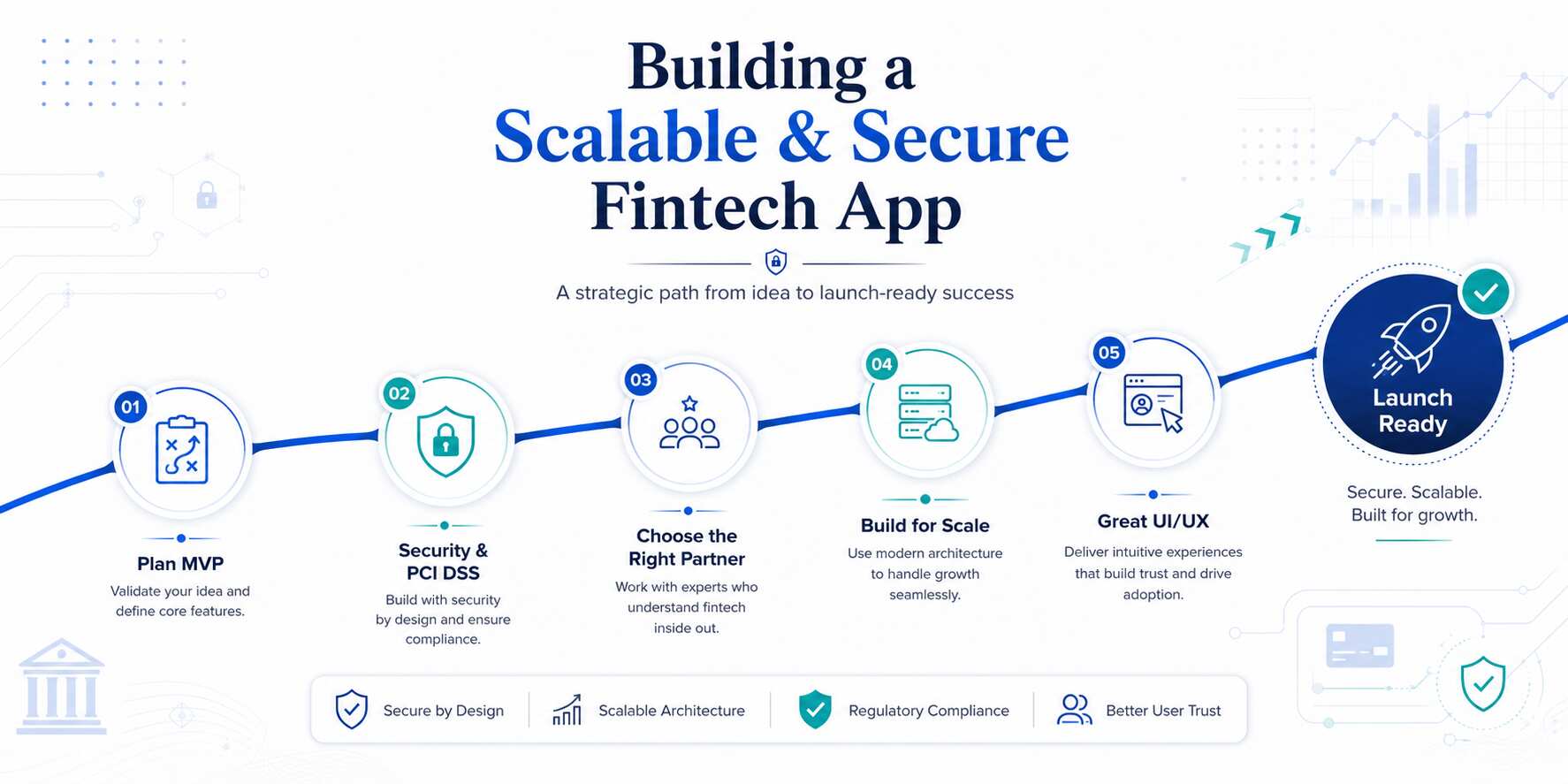
With the right How to Hire a Fintech App Development Company guide, founders should assess potential partners based on these factors:
- Experience using financial APIs and banking integrations.
- Experience in third-party security audits
- Chicago fintech mobile app development and San Francisco Fintech mobile app development build a portfolio of fintech-specific builds
- Clear communication and a good after-launch support system
The most expensive mistake that Austin Fintech mobile app development startups make is haste in choosing a vendor.
Ignoring Emerging Trends and Scalability
If a product isn’t scalable, it will reach its limits of performance soon. Many fintech startups start with a single backend system that simply isn’t capable of scaling to meet the demands of volume, third-party integrations, or new trends such as embedded finance, real-time payment rails, and AI-based credit scoring.
These are not future expectations, but today’s expectations from users and investors. This is particularly true for platforms that provide blockchain app development services or multi-currency wallets, where the number of transactions may increase unexpectedly.
Startups that consider scalability from the outset of their technical design always outperform startups that consider it a future issue.
UI/UX Negligence and Brand Confusion
Even if the app is technically correct, it may not work if users are not able to navigate it or like it. Bad user experience and user interface decisions cause users to abandon and lose.
Whether it’s communicating trust, clarity, and simplicity at each touchpoint or ensuring that the interface is intuitive and easy to navigate, fintech users demand interfaces that communicate with them. Financial stress is a reality, and a confusing interface will exacerbate it.
When it comes to mobile app development, startups aiming at audiences such as retail or verticals like custom logistics mobile app development or doctor appointment app development, hybrids tend to mimic interface patterns of big companies without making the necessary tweaks to suit their audience.
According to Forbes Tech Council, businesses that focus on UX design early experience significantly reduce customer acquisition costs and improve long-term customer retention.
Conclusion
A mistake is the reason why fintech startups fail, not a bad idea. While these errors may seem inevitable, they don’t need to be with the right knowledge and the right partners. While these errors can appear to be unavoidable, they’re not with the right knowledge and the appropriate partners.
The startups that succeed invest in planning, security, scalability, and design: no ifs, ands, or buts. No matter if they are developing blockchain application development services in San Francisco or scaling their fintech mobile application development services in New York, the successful ones are investing in planning, security, scalability, and design, no matter what.