When it comes to making decisions for a growing business, one of the most critical is selecting the proper foundation for your online store.
Thank you for reading this post, don't forget to subscribe!With the growth of digital commerce, brands are increasingly seeking an experienced ecommerce app development company to help them choose between a pre-made platform such as Shopify and a completely custom-made platform.
Both routes are valid, but which one is right depends on your growth goals, budget, and plans.
The Core Difference Between Shopify and Custom Apps
Table Of Content
Shopify is a subscription-based, hosted platform that enables companies to get an online store up and running in no time, without writing a single line of code. It comes with basic infrastructure, security, and hosting. This quick-to-launch benefit is truly worth it for businesses at a very early stage that are just trying out their market.
Custom ecommerce apps are created by a dedicated team of developers to meet a brand’s specific needs. Build an app like Amazon and Trendyol, or create something completely new; a custom approach offers flexibility that no template-based platform can provide. Architecture, user flows, payment integrations, and data ownership are all fully controlled by the business.
Shopify vs Custom eCommerce App: A Feature-by-Feature Breakdown
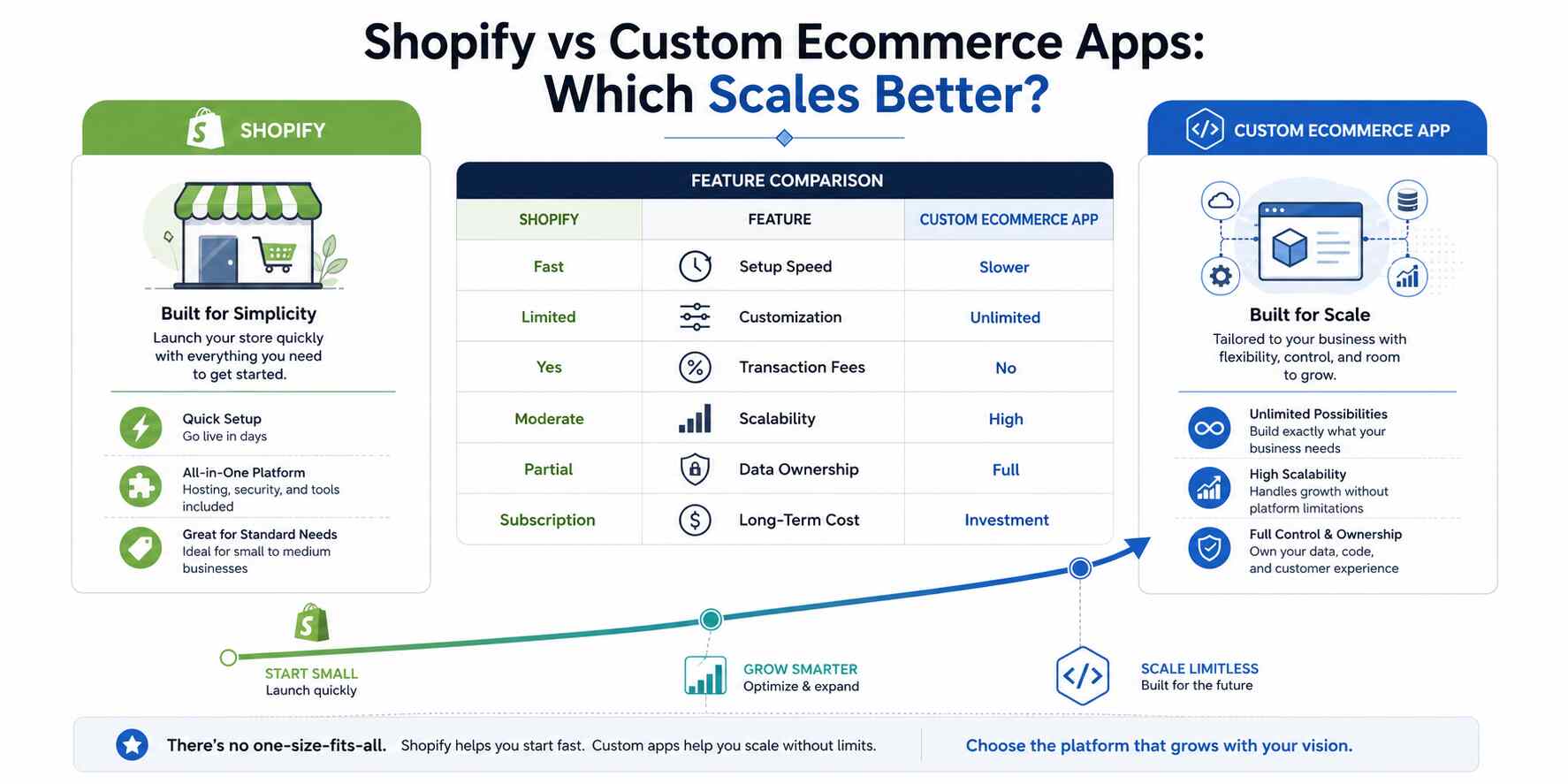
When choosing between Shopify vs custom ecommerce app, it can be a matter of control versus convenience. Shopify has thousands of pre-built plugins, a quick installation process, and fixed monthly fees. It also has transaction fees, limited backend customization, and restrictions on data access.
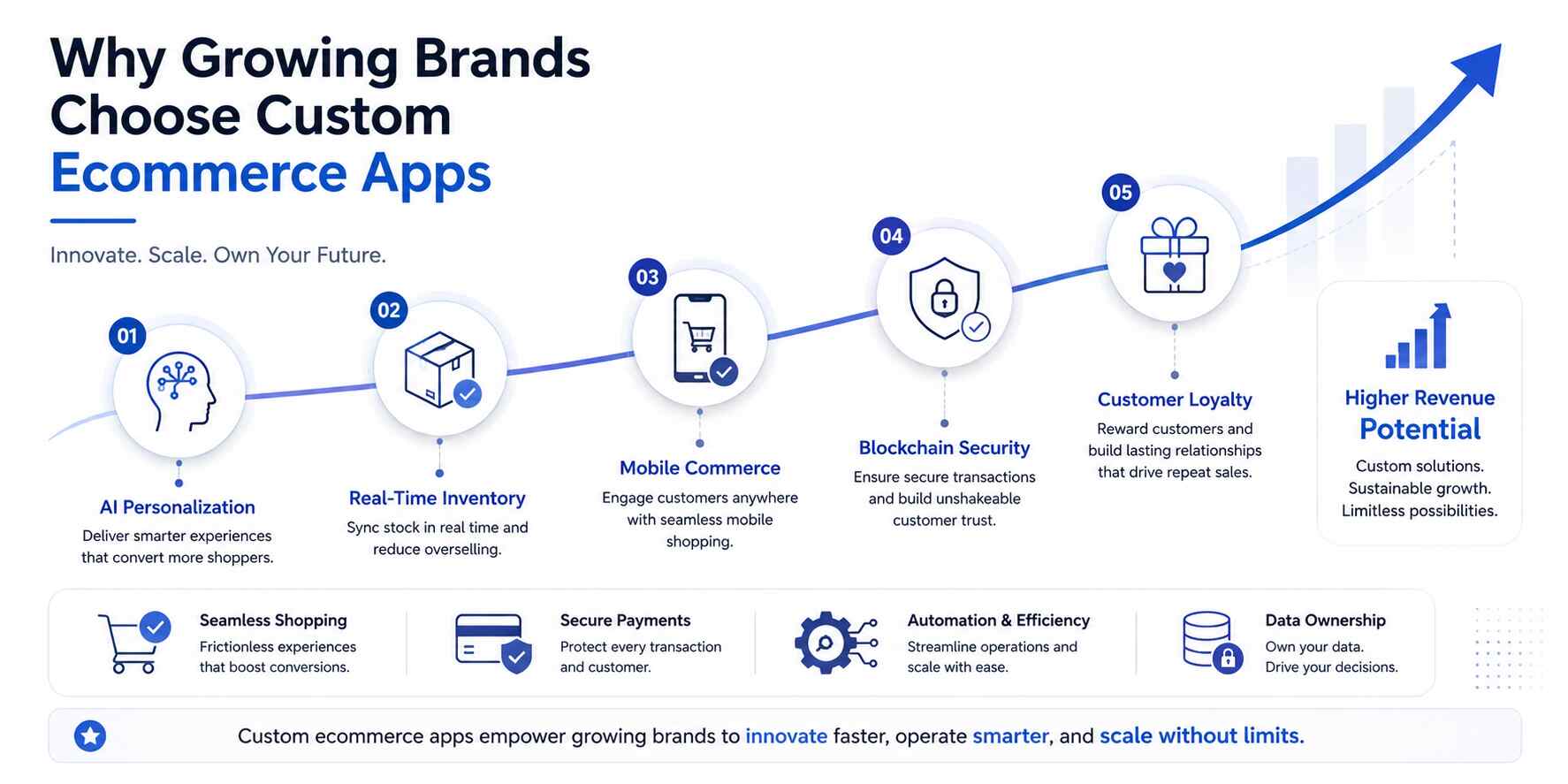
Custom apps take those walls out. Even the most powerful e-commerce platforms’ plugin library can’t limit businesses from implementing successful ecommerce app features like AI-powered personalization, real-time inventory syncing, and loyalty ecosystems. These features are typically essential for brands that have reached a certain level of sales.
| Feature | Shopify | Custom App |
| Setup Speed | Fast (days) | Slower (weeks/months) |
| Customization | Limited | Unlimited |
| Transaction Fees | Yes (unless Shopify Payments) | No |
| Scalability | Moderate | High |
| Data Ownership | Partial | Full |
| Long-term Cost | Recurring subscription | Higher upfront, lower ongoing |
Cost, Revenue Potential, and Who Should Decide What?
Budget is typically the first criterion in this decision. The ecommerce app development cost 2026 is influenced by a variety of factors, including features, platforms, and development expertise. The cost of a Shopify store is a few hundred dollars per month, whereas a fully custom app can cost $30,000 to $150,000+, depending on the complexity.
In the ecommerce website vs mobile app comparison, revenue comparison consistently finds that native mobile apps have higher average order values and better retention. Forbes predicts that the majority of all online retail transactions will be made via mobile in the next few years, making a great mobile-first experience a key strategy.
Where to Find the Right Development Partner?
Geography is a significant factor in vendor selection. Companies in tech hubs like Los Angeles, New York, and San Francisco often look for eCommerce app developers in Los Angeles, or large-scale commercial eCommerce App Developers In New York. The landscape of software production is such that eCommerce App Developers in San Francisco are the most sought-after.
As startup cities continue to grow, companies in these areas are turning to eCommerce app developers in Austin, eCommerce App Developers In Chicago, and eCommerce app developers in Miami to help them navigate their local startup environment.
There are several benefits to selecting the appropriate regional partner:
- Clear and efficient cross-time-zone communication.
- More convenient face-to-face meetings and sprint reviews.
- Increased accountability via local business relationships.
- Increased awareness of the regional market and consumers’ preferences.
- Improved turnaround of revisions and project updates.
Checking the rankings of the top Android app development companies also helps you discover those companies that have ecommerce expertise and not general app studios.
Integrating, Designing, and Emerging Technology
Today’s online retailers need to enable more sophisticated integrations than those offered by a simple online store. A sports app development company will need live scoring APIs, and a music streaming app development company will need DRM-protected audio delivery. Such requirements are always unique and typically require bespoke solutions.
Custom development at the growth stage is a strong case, as companies with complete control of their technology stack grow faster and maintain their data benefits over time, according to a Harvard Business Review report on platform business models.
Design Trends and Blockchain That Are Reshaping eCommerce Apps
The way users interact with apps is changing, and these trends are impacting every type of app. As the user experience evolves in app design, so do the expectations. Although Shopify themes are very polished, they are still templates used by thousands of other stores, whereas custom apps can be built with cutting-edge interfaces tailored to the brand.
The benefits of custom blockchain development for businesses are also starting to make a significant impact on ecommerce:
- Supply chain transparency through immutable product tracking
- NFT-based loyalty programs that reward repeat customers
- Decentralized payment options beyond traditional gateways
- Smart contract automation for order fulfillment and refunds
- Enhanced data security reduces fraud risk at checkout
These features are not offered on any typical Shopify store, and for progressive brands, custom development is the only way to go.
Conclusion
In the world of ecommerce, the website vs mobile app discussion typically doesn’t have a clear-cut answer, but scaling does. Shopify is a good option for businesses that are experimenting with their ideas at smaller volumes.
If you’re looking for something to help your brand grow in the long run, a reputable ecommerce app development company with custom development capabilities can provide the control and performance you won’t find elsewhere.
If you compare the ecommerce app development cost in 2026 with its long-term revenue potential, custom app development is consistently cost-effective.